
The GLP-1 Reformulation Crunch: Why Empty R&D Benches Are Delaying "Better-For-You" Product Launches

Updated: Jul 30
The GLP-1 product reformulation talent gap is delaying "better-for-you" launches because the scientists who can build high-protein, high-satiety, nutrient-dense products in smaller portions without sacrificing taste and texture are a narrow, largely passive talent pool, and most R&D teams don't have one on staff. Companies sourcing nutrient density and satiety formulation specialists through a specialized food and beverage recruiter are getting these products to shelf faster than companies trying to fill the gap with generalist food scientists or internal hiring alone.
The Real Bottleneck Isn't Demand. It's Who's Left to Build the Product
By now the GLP-1 story is familiar: a drug class that's reshaping how nearly one in eight U.S. adults eats, on track to reach 30 million Americans by 2030, has forced every major food and beverage company into some version of a reformulation sprint. That macro shift is already well established. What isn't well understood yet is the narrower problem sitting underneath it: the specific bench of R&D talent capable of actually building these products, which is thinner than most companies realize until they go looking for it.
One nutrition manufacturer put $45 million behind a 2026 R&D push aimed squarely at GLP-1-optimized formats, including nausea-relief protein beverages and enriched protein gummies, while several of the largest global food and beverage companies race high-protein, low-sugar ranges to shelf. Budget was never the constraint on any of these launches. The constraint is the same six or eight people in the country who've actually solved the technical problem these launches require, and every company chasing this trend is trying to hire from that same short list at once.

The GLP-1 Product Reformulation Talent Gap, Explained
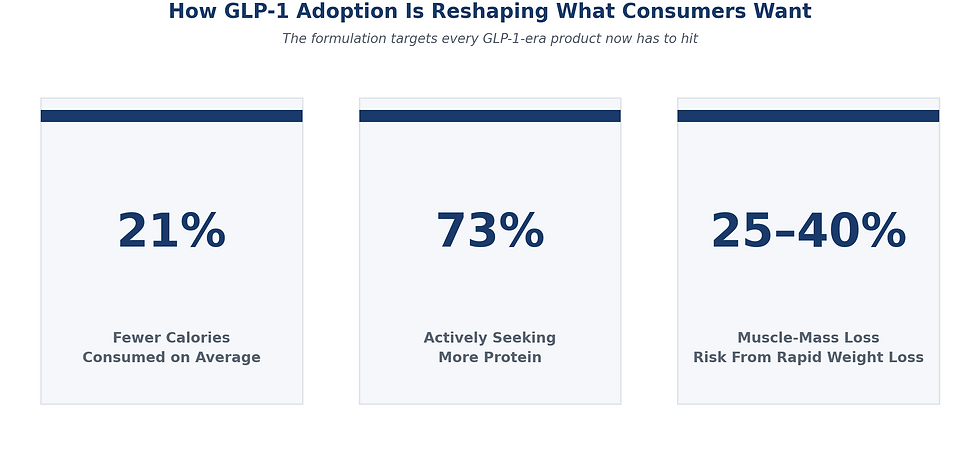
Building a "Goldilocks" product for the GLP-1 era, one that works for GLP-1 users and non-users alike, means packing more protein, fiber, vitamins, and minerals into a smaller portion while cutting sugar and calories, without losing taste or texture as the product cools or sits on a shelf. GLP-1 users consume about 21% fewer calories on average and spend nearly a third less on groceries, and 73% of them are actively trying to eat more protein, driven in part by the 25 to 40% muscle-mass loss that can accompany rapid weight loss on these drugs. Ingredient-side R&D leaders describe the same pattern: consumer response to these products keeps shifting as the drugs themselves evolve, which means formulation targets are moving, not fixed.
That's a genuinely hard technical problem, not a generic "add more protein" exercise. Nutrient-dense reformulation introduces off-notes, texture breakdown, and stability issues that require real expertise in flavor modulation and masking, protein system optimization, and clean-label preservation to solve. The scientists who've actually done this work, not adjacent work, are few, and almost none of them are sitting on a job board. They're already deep in a competitor's GLP-1 reformulation program, well compensated, and not responding to a generic recruiter outreach about a "Food Scientist II" req.
Why a Generalist Food Scientist Search Can't Close This Gap
Most internal talent-acquisition teams and generalist recruiters run one version of the same search: keyword-match "food scientist" against whoever's active on a job board. That approach was never built to evaluate protein system fluency, flavor masking at high protein/low sugar ratios, portion-and-satiety design, or shelf-stability under nutrient-dense reformulation. Those are the specific criteria this role actually demands. A recruiter who can't ask a candidate a real technical follow-up question about any of those four things can't tell the difference between someone who's solved this problem and someone who's read about it.
That mismatch is exactly why R&D benches stay empty through an entire product cycle. A generalist search produces resumes; it doesn't produce the person who's already solved the specific texture-and-taste problem your team is stuck on, and every month spent re-running that same keyword search is a month a competitor's reformulated product gets to shelf first.
What Actually Closes the Nutrient Density and Satiety Formulation Gap
Closing this gap takes a search built around the same technical criteria the role demands, run by recruiters who understand nutrient density R&D staffing well enough to vet for it, not just source resumes against it. That starts with evaluating candidates on real reformulation work: nutrient-density product development, satiety-focused portion design, and protein and fiber fortification, rather than adjacent food science experience that looks similar on paper but hasn't touched the actual problem. It also means sourcing passively from the start, since the strongest satiety formulation scientists are almost never active candidates; if a search only reaches people already looking, it's only reaching the talent other companies have already passed on. And it means moving fast, because GLP-1 adoption curves and competitor launches don't wait for a six-month internal search to run its course.
People Capital has been placing R&D and technical leadership exclusively in food, beverage, flavor, ingredient, color, nutraceutical, agriculture, chemical, pharmaceutical, and pet food since 2007. That focus is why a conversation with a nutrient-density reformulation scientist isn't a cold call for us. It is a continuation of relationships built inside this exact technical world, GLP-1-era included. One measure of what that looks like in practice: the #1 leading B2B flavor sales professional in the world, currently managing over $100 million in business, put it simply: "When People Capital calls, I pick up the phone every time." That's the kind of standing relationship that gets a passive candidate to actually consider a conversation, rather than ignoring the tenth generic recruiter message they got this month.
Every Week This Gap Stays Open Is a Week a Competitor's Product Gets There First
The GLP-1 shift isn't slowing down, and neither is the pressure on R&D teams to reformulate faster than their bench can currently support. The companies winning the "better-for-you" race in 2026 won't be the ones with the biggest R&D budgets. They'll be the ones who closed their nutrient density and satiety formulation talent gap while their competitors were still running the same generalist search that's already failed once.
This is one of four fault lines converging on food and beverage R&D benches right now. Read the full strategy for staffing ahead of all of them: Next-Gen Formulation Sourcing & R&D Strategy
Ready to fill the nutrient-density and satiety formulation seats your 2026 launch calendar depends on?


Comments